
The output of eight core sectors grew by 16.8 per cent in May, mainly due to a low base effect and uptick in production of natural gas, refinery products, steel, cement and electricity, official data released on Wednesday showed. The eight infrastructure sectors of coal, crude oil, natural gas, refinery products, fertilisers, steel, cement and electricity had contracted by 21.4 per cent in May 2020 due to the lockdown restrictions imposed to control the spread of the COVID-19 infections. In March this year, these key sectors had recorded a growth of 11.4 per cent, and 60.9 per cent in April.

Overall exports in 2008-09 grow at slowest pace in 7 yrs.

A revamped Electronic Data Interface system and easier norms for the Accredited Clients Programme are some features likely to be introduced to reduce the transaction time and costs of exporters. Some of the measures may figure in the annual supplement to the Foreign Trade Policy, which is being released on Apr 11. ComMin officials expect the new Electronic Data Interface System to become operational by the end of this fiscal. Exporters will have to submit lesser documents.
India's exports and imports have together dipped for the first time in seven years, signalling weakening of domestic and external demand in the backdrop of global economic crisis. Government officials said the sale of Indian goods in overseas markets was likely to see a dip in February as well.

This is its lowest level since August 30

India's medical devices imports surged 41 per cent to touch Rs 63,200 crore in 2021-22, led by a 48 per cent year-on-year (YoY) jump in imports from China to Rs 13,538 crore, the commerce ministry data analysed by the Association of Indian Medical Device Industry (AiMeD) has showed. Local industry players say this has led to several small and medium units to shut shop. Rakesh Vaid of Usha Fabs, a garments exporter, had started making N95 masks in his Gurgaon factory during the peak of the Covid-19 pandemic.
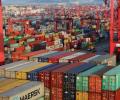
Imports during October also rose by 17.62 per cent to $44.11 billion, leading to widening of trade deficit to $17.13 billion.

"At the moment, the fall is arrested (and it) is very clear. The growth is happening. We will only be looking at the steady growth. It may be slow but steady," Commerce Minister Nirmala Sitharaman told reporters in New Delhi.
The country's exports rose by 47.34 per cent to $32.46 billion in June on account of healthy growth in sectors such as engineering, gems and jewellery and petroleum products, even as trade deficit aggregated at $9.4 billion during the month, according to the data released by the commerce ministry on Friday. Exports in June last year stood at $22 billion and $25 billion in June 2019. In May 2021, the outward shipment was worth $32.27 billion, while in April this year, it was $31 billion. Imports in June 2021 grew by 96.33 per cent to $41.86 billion, from $21.32 billion in June last year. In June 2019, imports stood at $41 billion.

Exports of electronics goods has risen by 24 per cent from April to November as compared with the same period in the last fiscal, the largest increase out of India's top 10 export categories. The increase has been propelled by mobile exports under the Production Linked Incentive (PLI) scheme and has pushed electronics up from sixth to fifth position in the top 10. A gap of $200 million separates electronics from occupying the fourth position, currently held by drugs and pharmaceuticals at $17.9 billion.

Increase in gold imports pushed the country's trade deficit to a five-month high of $ 15.33 billion in April.

Forex dealers said besides strong demand for the American currency from importers, capital outflows mainly weighed on the domestic currency.
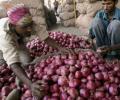
The government on Friday announced it will release onion from its buffer stock in the targeted regions with immediate effect to ensure prices remain under check till the new crop arrives from October onward. The government is exploring multiple options for disposal of onion: e-auction, e-commerce as well as through states at discounted rates via retail outlets of their consumer cooperatives and corporations, it said. The government has currently maintained 3 lakh tonnes of onion under the Price Stabilisation Fund (PSF) to meet any exigencies, if rates go up significantly during the lean supply season.

As India looks to mend its Covid-battered economy, one thing that will grab the attention of all concerned is the path that both wholesale and retail inflation will follow. Even the Reserve Bank of India in its latest policy statement said, "Going forward, the inflation trajectory is likely to be shaped by uncertainties impinging on the upside and the downside.
Trade deficit marginally widened to $9.85 billion as against $9.72 billion in February 2019.
India's export growth slowed down to 14.08 per cent during January 2007 to $9.64 billion, while imports rose 35.74 per cent to $15.43 billion over the corresponding month a year ago.
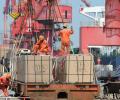
Trade deficit during the month narrowed to USD 14.54 billion from USD 15.3 billion in January 2020. It was USD 15.44 billion in December 2020.

The CVC is awaiting sanction to prosecute nine employees of PNB and 2 other banks who were booked by the CBI for their alleged involvement in corruption.
Exporters on Thursday demanded fiscal incentives, tweaking in customs duties on certain products and credit at affordable rates in the forthcoming Budget to boost exports and create jobs. In a pre-budget virtual meeting with Finance Minister Nirmala Sitharaman, the Federation of Indian Export Organisations (FIEO) said the depreciation of the rupee against the US dollar is affecting exports' competitiveness and the sector requires more support. "Creation of employment is the biggest challenge faced by the country...We would urge the government to provide fiscal support to units which provide additional employment in the export sector," the exporter's body said.

The key sectors that received the maximum foreign investment during the nine months of the fiscal include services, computer software and hardware, telecommunications, chemicals, and the automobile industry.

The output of eight core sectors grew 8.9 per cent in June, mainly due to a low base effect and uptick in production of natural gas, steel, coal and electricity, official data showed on Friday. The eight infrastructure sectors of coal, crude oil, natural gas, refinery products, fertilisers, steel, cement and electricity had contracted by 12.4 per cent in June 2020 due to the lockdown restrictions imposed to control the spread of coronavirus infections. In May this year, these key sectors had recorded a growth of 16.3 per cent, while it was 60.9 per cent in April.

Key sectors that received maximum FDI include services, computer software and hardware, telecommunications, trading, chemicals, and automobile.

India's export basket for Pakistan has a limited portfolio as Pakistan has not given 'most favoured nation' status to New Delhi and such goods have ready market in South Asia and the Middle East.

Singapore continued to be the largest source of FDI in India followed by Mauritius, the US, the Netherlands and Japan.

India's climate change goals are turning combustible. On the one hand, a protracted dispute between the government and manufacturers over subsidies threatens to slow the pace of electric vehicle (EV) sales. On the other hand, repeated assertions by different arms of the government over banning sales of new fossil fuel-fired vehicles have queered the pitch for energy investments. Before we address the issue of the recommended diesel vehicle ban in the recent report on energy transition, issued months before the next round of global climate talks begin in Dubai in November, let's look at what's at stake.

Investor sentiment remained upbeat on narrowing trade deficit and sustained foreign fund inflows.

The main export sectors including engineering, petroleum products and gems and jewellery have recorded negative growth.

The California walnuts shipped from the US to India have seen a sharp uptick with imports more than doubling from September to November against the same period last year. This comes after New Delhi removed its retaliatory customs tariffs on the key dry fruit. Two days ahead of US President Joe Biden's visit to New Delhi to attend the G20 Summit on September 9-10, India dropped additional customs duties on about half a dozen US goods that were imposed in 2019 in response to America raising tariffs on certain steel and aluminum products coming from India.

The Centre will invest around Rs 200 crore over five years for the exploration and development of these mines.

The country's exports grew 5.37 per cent year-on-year to $27.24 billion in January 2021, mainly driven by healthy growth in pharma and engineering sectors, according to provisional data of the commerce ministry. Trade deficit during the month narrowed to $14.75 billion from $15.3 billion in January 2020. It was $15.44 billion in December 2020. Imports in January 2021 rose 2 per cent to $42 billion.

Beware, it's not just criminals who want your data!
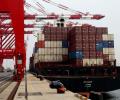
On the back of rising crude oil purchases, India's bill for imports from sanctions-hit Russia jumped 3.5 times in a year in April to $2.3 billion, showed data from the commerce ministry. In April, India's crude oil imports from Russia were valued at $1.3 billion, 57 per cent of India's total inbound shipments from Russia. Other major imported items during the month included coal, soybean and sunflower oil, fertilisers, and non-industrial diamonds. That month, Russia was also the fourth-largest crude petroleum supplier to India, after Iraq, Saudi Arabia, and the United Arab Emirates (UAE).

Explore, engage, participate and excel in as many co-curricular activities and hackathons as possible to improve your self-confidence, communication skills and overall personality, advises rediffGURU Chocko Valliappa.
If the provisional figures released by the department of commerce are any indication, India is unlikely to meet the export target of $125 billion in the 2006-2007 fiscal.

Slow growth in the key sectors would have implications on the IIP number as these segments account for about 41 per cent of the total factory output.

According to the data available on the Reserve Bank of India's website, net workers' remittances in April-June 2018 were $11.5 billion

Fertiliser production dropped sharply by 11.5 per cent, crude oil by 5 per cent and natural gas by 0.9 per cent in October over the year-ago month

Retail inflation hit an eight-month high of 6.07 per cent in February, remaining above the RBI's comfort level for the second month in a row, while wholesale price-based inflation soared to 13.11 per cent on account of hardening of crude oil and non-food item prices, government data showed on Monday. The previous high for retail inflation was 6.26 per cent in June 2021. The consumer price index (CPI) based retail inflation, which is taken into account by the Reserve Bank of India (RBI) while deciding its monetary policy, rose mainly because of costlier food items, as per the data released by the National Statistical Office (NSO).

India imported goods worth $4.23 billion in June from sanctions-hit Russia, up 6.8 times as compared to last year, as demand for shipments of crude oil grew at the fastest pace during the month. Crude oil worth $3.02 billion was imported in June, which translates into a share of 71 per cent of the total imports from Russia, commerce and industry ministry data showed. Similarly, during the April-June quarter, India's imports from Russia were valued at $9.27 billion, up 369 per cent on year.
